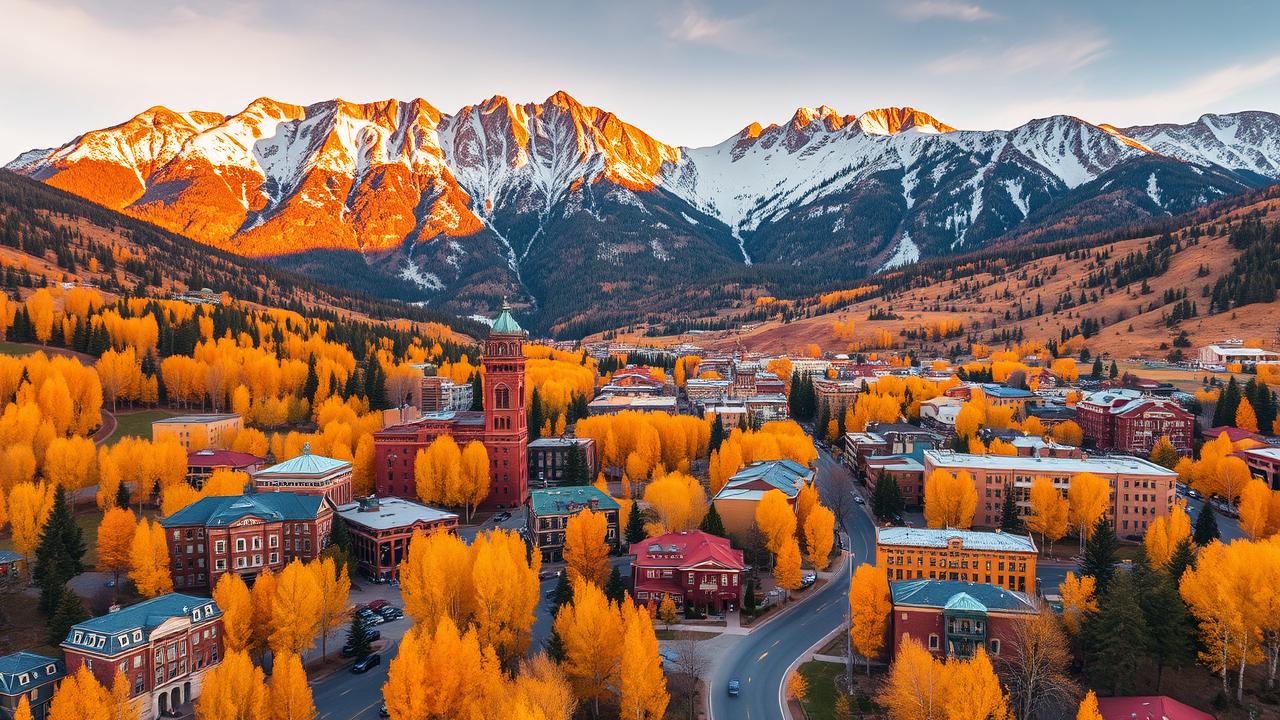
The Market Has Changed, Not Just the Pricing
If you've owned property in the Telluride area for a while, you may have noticed that wildfire-related insurance conversations feel different than they did several years ago. That's not your imagination. Across Colorado's mountain and foothill communities, carriers have generally become more selective about wildfire-exposed properties — restricting new business in certain areas, declining to renew some existing policies, or attaching more conditions to the coverage they do offer.
This is a market-availability shift as much as a pricing one. In the past, a homeowner whose renewal price went up could usually shop around and find a comparable replacement. In today's market, wildfire-exposed properties increasingly face a smaller pool of carriers willing to write the risk at all, which changes the nature of the problem from "find a better rate" to "find coverage that will actually be offered." Understanding why that shift happened — and what insurers are actually looking at — is the first step to protecting your insurability, not just your premium.
What "Defensible Space" Actually Means
Defensible space is the buffer zone around a structure where vegetation and other fuels have been managed to slow or stop an advancing wildfire and to give firefighters a safer area to work from. It's not a single action — it's a layered set of practices, typically thought of in zones radiating out from the home:
- Immediate zone (closest to the structure). This is about eliminating fuel contact with the building itself — clearing dead vegetation and debris from roofs, gutters, and against exterior walls, and keeping flammable materials like woodpiles and mulch away from the foundation.
- Intermediate zone. Here the focus shifts to spacing — thinning trees and shrubs so fire can't easily move from plant to plant to structure, and reducing "ladder fuels" (low branches and brush that let a ground fire climb into tree canopies).
- Extended zone. Further out, defensible space is less about elimination and more about interrupting continuous fuel loads — creating breaks in vegetation density across the broader property.
None of this guarantees a home survives a wildfire. What it does is measurably change the odds, by reducing the ember and radiant-heat exposure a structure faces and by making the property safer for fire crews to defend if they're able to respond.
Why Insurers Increasingly Require or Reward It
Insurers are, at their core, in the business of pricing and managing risk. As wildfire behavior in the West has become harder to model using historical patterns alone, carriers have leaned more heavily on defensible space as a factor they can actually observe and verify at a specific property — as opposed to broader risk factors like regional climate trends that no individual homeowner can control.
That's led to a few consistent patterns:
- Some carriers now request or require documentation of defensible space work as a condition of binding or renewing coverage in higher-risk areas.
- Property-level wildfire risk scoring increasingly factors in defensible space status alongside structural characteristics like roofing material, siding, and proximity to fuel sources.
- In some cases, demonstrated defensible space work can be the difference between a carrier offering terms at all and declining the risk outright — not merely a factor that nudges the price.
The practical shift is that defensible space has moved from "good practice recommended by your local fire department" to "a factor your insurer is actively evaluating when they decide whether to write or keep your policy."
WUI Risk Mapping and Insurability
Wildland-urban interface, or WUI, refers to the zone where development meets or intermingles with undeveloped wildland vegetation — exactly the setting most Telluride-area properties sit in. Insurers and third-party risk-modeling firms increasingly use WUI mapping, combined with vegetation data, terrain, historical fire patterns, and local climate factors, to score wildfire risk at a granular, property-specific level.
This matters because WUI risk scoring doesn't just affect price — it affects whether a property is offered coverage in the first place. Two homes a short distance apart can receive meaningfully different risk scores based on differences in surrounding vegetation, slope, aspect (which direction a slope faces relative to prevailing wind and sun), and distance to continuous fuel. A homeowner who assumes their risk is the same as their neighbor's because they're close by may be working from an outdated picture of how insurers are actually evaluating the property.
When a Carrier Non-Renews for Wildfire Risk
A wildfire-related non-renewal is disruptive, but it's a solvable problem — and it helps to understand the general landscape of options rather than treating it as a dead end.
When a standard-market carrier declines to renew a wildfire-exposed property, homeowners generally have a few broad paths available, depending on the state of the market and the specifics of the property:
- Specialty and surplus lines carriers, which write outside the standard admitted insurance market and are often more willing to underwrite higher-risk wildfire exposure, typically at different terms and conditions than a standard homeowners policy.
- State-backed residual market mechanisms, which exist in various forms across wildfire-prone states as a coverage option of last resort when the standard and surplus markets won't write a property. The specifics of what's available and how it works vary and change over time, so this is a conversation to have directly with a broker who tracks current market conditions rather than something to assume based on general knowledge.
- Layered or restructured coverage, where a broker may need to combine multiple policies or carriers to fully cover a property that no single standard carrier will take on completely.
The point is that a non-renewal notice is a signal to act — ideally well before the current policy lapses — not a signal that the property has become uninsurable.
What Actually Helps Your Insurability
Some of the most effective steps a homeowner can take are the same actions that reduce actual fire risk to the property, which is exactly why insurers pay attention to them:
- Maintaining defensible space consistently, not just once — vegetation grows back, and insurers increasingly expect ongoing maintenance rather than a one-time clearing.
- Addressing roofing and exterior material choices, since ember exposure is one of the primary ways homes ignite in a wildfire, often well before a flame front ever reaches the structure.
- Keeping documentation of defensible space and mitigation work, including dates and scope, so it can be presented to an underwriter as evidence rather than described after the fact.
- Coordinating with any community-level or neighborhood wildfire mitigation efforts, since insurers sometimes evaluate risk at a broader area level in addition to the individual property.
- Working with a broker who actively tracks which carriers are currently writing wildfire-exposed mountain properties, since that landscape shifts and a policy that made sense a few years ago may not reflect what's available today.
A Representative Scenario
Consider a home on a forested slope that received a non-renewal notice after years with the same standard carrier. The immediate reaction is often to assume the property is now effectively uninsurable. In practice, the more useful next step is usually a property-specific review: what does the surrounding vegetation and defensible space actually look like today, what does current WUI risk mapping show for that parcel, and which carriers in the current market are actively writing properties with a similar risk profile. That review often turns up options that aren't visible from a single "no" letter — but it requires someone who's tracking the market in real time, not a generic policy search.
The Bottom Line
Wildfire risk in the Telluride area isn't going away, and neither is the tighter insurance market that's come with it. But insurability isn't fixed — it responds to real, documented mitigation work and to knowing which carriers are actually active in this market right now. If you've received a non-renewal, are worried about one, or simply haven't reviewed your wildfire coverage in a while, that's a conversation worth having before you're forced into it by a letter in the mail.