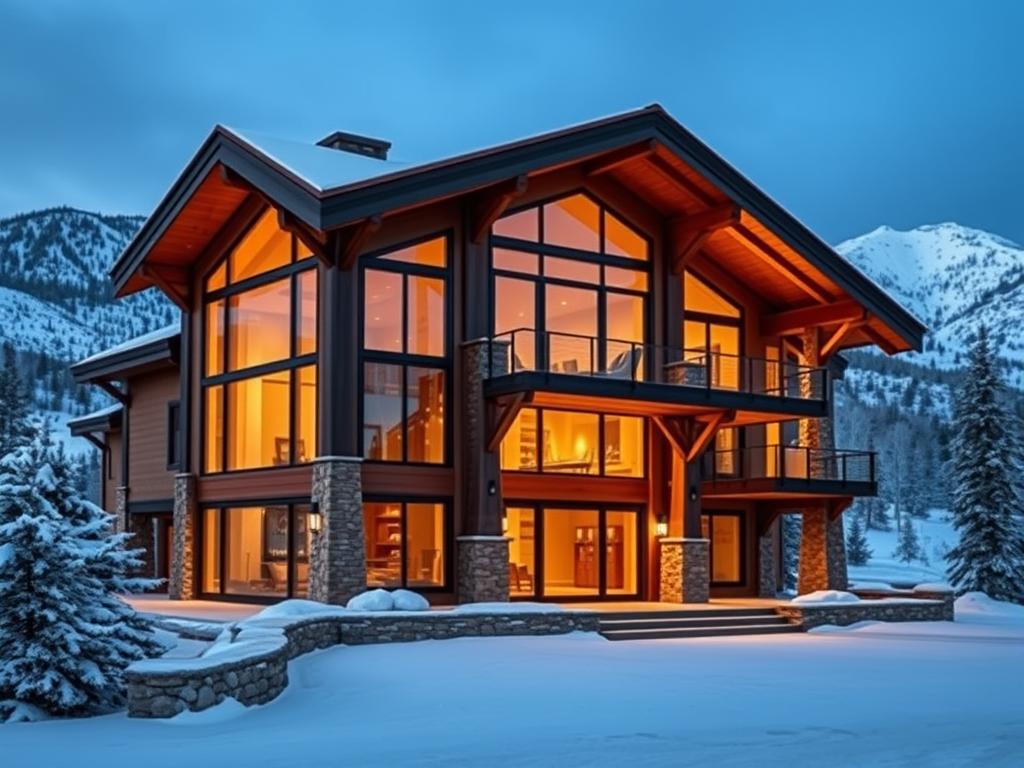
A Different Kind of Load
Most homeowners think about roof risk in terms of storms: a big wind event, a hailstorm, a single dramatic night. Snow load doesn't work that way. It's cumulative. Snow falls, compacts, is joined by more snow, and sits — sometimes for months — while its weight on the structure below keeps building.
That distinction matters for insurance purposes. A wind or hail claim usually traces back to one identifiable event on one identifiable date. A roof failure from snow load is often the result of an entire season's accumulation, compounded by freeze-thaw cycles, wind-loading on one side of a roofline, and the changing density of the snowpack itself as spring temperatures rise. When an adjuster is trying to determine cause of loss, that difference between a single event and a season-long process can shape how a claim is evaluated.
This is worth understanding before you're standing in your living room looking at a sagging ceiling, not after.
Roof Collapse as Its Own Peril
Many homeowners assume "my roof is covered" is a single, simple fact. In practice, roof collapse is typically addressed as a distinct peril within a policy, separate from wind, hail, and fire — and it can carry its own conditions.
A few things tend to differentiate roof collapse coverage from other structural coverage:
- Cause-of-loss scrutiny. Because collapse can result from age, deferred maintenance, or design and construction issues as much as from weather, carriers often look closely at whether the loss was truly weather-driven or whether it reflects a pre-existing structural weakness that snow load simply exposed.
- Excluded causes. Some policies exclude collapse resulting from defective construction, decay, or inadequate maintenance — even if snow load was the immediate trigger. If the roof was already compromised, the insurer may argue the loss falls under that exclusion rather than the weather peril.
- Contents and additional living expense. A roof collapse is rarely just a roof problem. Once the structure is breached, interior contents, insulation, and finishes are exposed to snow, moisture, and cold. Policies vary in how completely they extend collapse coverage to the resulting interior damage and to temporary housing costs while repairs are underway.
The practical takeaway: "collapse" is a defined term in your policy, not a plain-English description of what happened to your roof. It's worth knowing exactly how your policy defines it before you need to rely on it.
Ice Dams and the Melt-Refreeze Cycle
Snow load gets the headlines, but ice damming causes a steadier stream of claims — and it's a mechanism distinct from collapse.
Here's the physical process: heat escaping from the living space below warms the roof deck unevenly. Snow on the warmer sections melts, runs down toward the colder eaves and overhangs, and refreezes there, since the eaves sit outside the heated envelope of the home. Over repeated melt-refreeze cycles, that ice builds into a dam. Water pooling behind the dam has nowhere to go but backward and under the shingles or roofing membrane, where it works its way into the roof deck, insulation, and eventually interior ceilings and walls.
This kind of water intrusion is functionally different from a leak caused by a single storm, and it's often slower to surface. A homeowner may not notice a stain or soft spot until well after the ice dam has already done its damage — which raises the same kind of "how long has this been happening" questions that carriers ask about any gradual water loss. A policy that handles sudden pipe bursts well doesn't necessarily treat ice-dam-driven water intrusion the same way, since the underlying cause is a slower, cyclical process rather than a single accidental event.
Roof design, attic ventilation, and insulation all affect how prone a given home is to ice damming — which is why two houses on the same street can have very different experiences in the same winter.
Why Older and Non-Engineered Roofs Are a Particular Concern
A meaningful share of homes and cabins in the Telluride area predate current snow-load engineering standards, or were built or added onto without a structural engineer's involvement in the roof design. That matters more here than in most parts of the country, because the region regularly produces snow loads that stress-test a roof's actual capacity rather than its theoretical one.
A few structural realities worth understanding if your home falls into this category:
- Older trusses and rafters may have been sized for the snow loads understood at the time of construction, which can be lower than what current codes require and lower still than what a heavy, wet, late-season snowpack can produce.
- Additions, dormers, and skylights are common points where roof framing was modified after the original build. These modifications don't always carry the same load capacity as the surrounding structure, and valleys created by intersecting rooflines can accumulate drifted snow well beyond the average depth on the rest of the roof.
- Flat or low-slope roof sections — increasingly common in contemporary mountain architecture — don't shed snow the way a steep pitch does, which shifts more of the load-bearing burden onto the structure itself rather than gravity.
None of this means an older or architecturally ambitious roof is uninsurable. It means the underwriting conversation should account for what the structure actually is, not a generic assumption about "a roof."
A Representative Scenario
Consider a cabin built decades ago with later additions, including a flat-roofed mudroom tacked onto one side. A winter with several consecutive heavy snow events, followed by a warm spell and a hard refreeze, puts sustained load on the flat section while an ice dam forms along the main roof's north-facing eave. The mudroom roof begins to sag. Around the same time, a stain appears on an upstairs ceiling near the eave.
Two separate mechanisms — cumulative structural load and ice-dam water intrusion — are happening at once, on the same roof, in the same season. How each is treated may depend on the specific wording of the policy's collapse peril, its water damage provisions, and any exclusions tied to maintenance or pre-existing condition. This is exactly the kind of situation where knowing your policy's language in advance, rather than discovering it during a claim, makes a real difference.
What to Ask Before Winter
Before the snow starts piling up, it's worth having a direct conversation with your broker or carrier about a few specific things:
- How does the policy define "collapse," and does that definition include partial collapse or sagging that hasn't fully failed yet?
- Are there exclusions tied to maintenance, age of the roof, or pre-existing structural issues — and if so, what would trigger them?
- How does the policy treat water intrusion from ice damming versus a sudden pipe burst? Are the claims-handling expectations different?
- If your home has additions, dormers, skylights, or mixed roof pitches, has anyone evaluated whether those transition points are adequately covered or whether they represent unusual risk?
- Does coverage extend to contents, insulation, and interior finishes damaged as a secondary consequence of a roof failure, and to temporary housing if the home becomes unlivable?
The Bottom Line
Snow load and roof collapse deserve to be treated as their own category of risk, not folded into a generic assumption about wind and hail coverage. If your home is older, has been added onto, or includes low-slope sections, that's worth flagging to your broker specifically — not as a formality, but because it changes the questions that matter. We work with mountain property owners on exactly this kind of policy review before winter sets in, so the coverage conversation happens on your schedule, not in the middle of a claim.