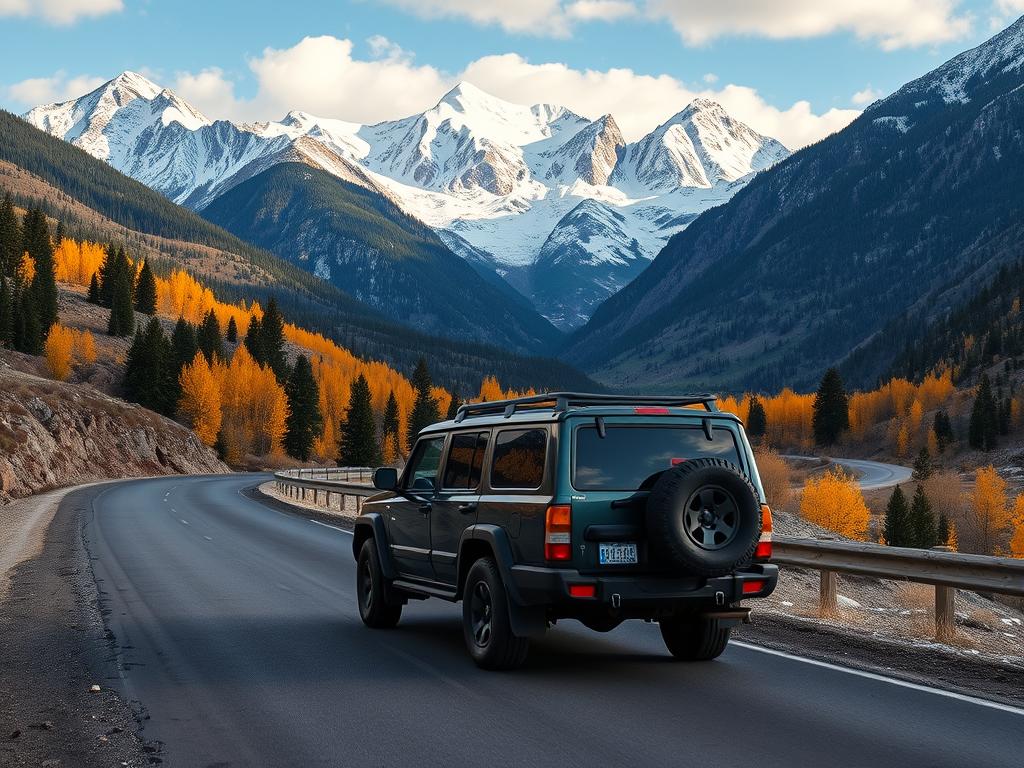
Access Is a Risk Factor, Not Just an Inconvenience
When people think about what makes a mountain property harder to insure, they usually think about elevation, wildfire exposure, or snow load. Access tends to get less attention — but for genuinely remote properties, it's one of the most consequential factors in both insurability and claims outcomes.
A property reached only by an unpaved, seasonal, or gated road; one that requires 4WD or high clearance for part of the year; or one that sits a meaningful distance from the nearest fire station, plowed county road, or emergency response point isn't just a lifestyle difference from a standard suburban lot. It's a different risk profile, because so much of what determines how bad a loss becomes depends on how quickly help — or even just information — can reach the property.
Why Time to First Response Matters More Than People Expect
Insurance is, in large part, about what happens between the moment a loss starts and the moment it's discovered and addressed. For a typical suburban home, that window is usually short: a neighbor notices smoke, a passerby sees water pooling under a garage door, a plumber can be on-site within hours. For a remote mountain property, that same window can stretch dramatically, and the loss keeps compounding the entire time.
Consider the difference between two versions of the same event: a pipe bursts while the home is unoccupied. In a well-traveled neighborhood, someone may notice within a day or two — a pooling stain, water at the foundation, or simply a scheduled check-in. On a property accessed by a private road that sees no regular traffic, with no neighbors close enough to notice anything unusual, the same burst pipe might run undetected for weeks. The water damage, the potential for mold, and the ultimate claim size are all directly a function of how long the loss went unnoticed and unaddressed — which is itself a direct function of access and how often anyone is actually present or checking on the property.
The same logic applies to fire response. A structure fire that a fire department can reach in minutes has a fundamentally different outcome than one on a property at the end of a long, seasonal, or difficult access road, where response time is measured very differently. This isn't a comment on the quality or dedication of rural and volunteer fire departments — it's simply a physical reality of distance and road conditions that insurers factor into how they evaluate a property.
Contractor and Materials Access After a Loss
Response time isn't the only place access matters — it also shapes what happens after a loss is discovered, during the repair process itself.
A few ways this plays out in practice:
- Extended repair timelines. Contractors and materials both need to physically reach the property. A remote site with seasonal or difficult access can turn a repair that would take weeks on an easily accessible property into a project that stretches across an entire season, particularly if the damage occurs late in the year and access becomes unreliable before repairs can be completed.
- Higher effective vacancy exposure. The longer a damaged, partially repaired structure sits before work can be completed, the longer it's exposed to further loss — additional weather damage, pest intrusion, or a second unrelated event compounding the first. Extended repair timelines effectively extend the vacancy period, which has its own set of coverage considerations.
- Limited contractor availability. Not every contractor is willing or equipped to take on a job at a remote or difficult-access property, which can narrow the pool of who's available and add further delay while the right crew is located.
None of this means remote properties can't be adequately covered — it means the timeline assumptions baked into a standard policy may not match reality, and that gap is worth addressing explicitly rather than discovering after a loss.
Standard Policy Assumptions vs. Remote Property Reality
A standard homeowners policy is generally built around assumptions that hold true for a typical suburban or in-town property: regular occupancy or frequent visits, quick emergency response, and a repair process that can start promptly once a loss is reported. For a remote mountain property, several of those assumptions may simply not apply, which is where gaps tend to show up:
- Vacancy provisions may not adequately account for a property that's inherently checked less often simply because of how hard it is to get to, independent of whether it's a second home or a full-time residence.
- Loss-of-use and additional living expense provisions may not reflect how much longer displacement could last when repairs depend on seasonal access.
- Documentation and reporting timelines in some policies assume a homeowner would reasonably have discovered a loss within a certain window — an assumption that may not hold for a property that isn't visited regularly.
What to Ask a Broker Before You Assume Standard Coverage Fits
If your property involves genuinely limited or seasonal access, it's worth having a direct conversation that goes beyond the standard quote process:
- Does this policy account for extended discovery time on losses, given how the property is actually accessed and how often it's visited?
- How does the policy handle extended repair timelines that result from contractor and materials access challenges rather than from the scope of damage itself?
- Are vacancy and loss-of-use provisions structured around a realistic picture of how this specific property is used, rather than a generic second-home assumption?
- Has anyone evaluated the property's actual distance and route to the nearest fire response and plowed road, and does that factor into how the policy is structured?
- If the property requires 4WD or seasonal access, does that affect claims reporting expectations or documentation requirements after a loss?
A Representative Scenario
Picture a cabin reached by several miles of unpaved, gated road that isn't maintained through the winter. The owner visits periodically but not on a fixed schedule. A heavy, wet snow event causes a section of roof to fail late in the season, and by the time the owner is next able to reach the property, weeks have passed and interior damage has spread well beyond the original point of failure. Once the loss is discovered, arranging a contractor willing to make the trip, and getting materials in before access closes again for the season, becomes its own project — extending the time the structure sits partially exposed.
None of the individual factors here are unusual on their own. Together, access, discovery time, and repair timeline compound into a claim that looks very different from the same physical damage occurring on an easily reached, regularly visited property. A policy built with that reality in mind, rather than a generic suburban template, is what actually protects the owner through a scenario like this.
The Bottom Line
If your property is genuinely remote — reached by a 4WD-only or seasonal road, gated, or simply a significant distance from fire response and plowed routes — that's a real underwriting factor, not a footnote. It affects how quickly a loss can be discovered, how long repairs realistically take, and how vacancy exposure builds during that process. The right move is a coverage conversation built around how the property actually functions, not an assumption that a standard mountain-home policy already accounts for it.